Loading...
Serving Yucca Valley, CA and surrounding areas. (442) 205-1236
Yucca Valley Fence & Deck builds pool decks, covered patios, pergolas, fences, and composite decks for homeowners throughout Desert Hot Springs. We have been working in the Coachella Valley since 2020 and understand how the intense summer heat, San Gorgonio Pass winds, and wide temperature swings here affect every outdoor structure we build.
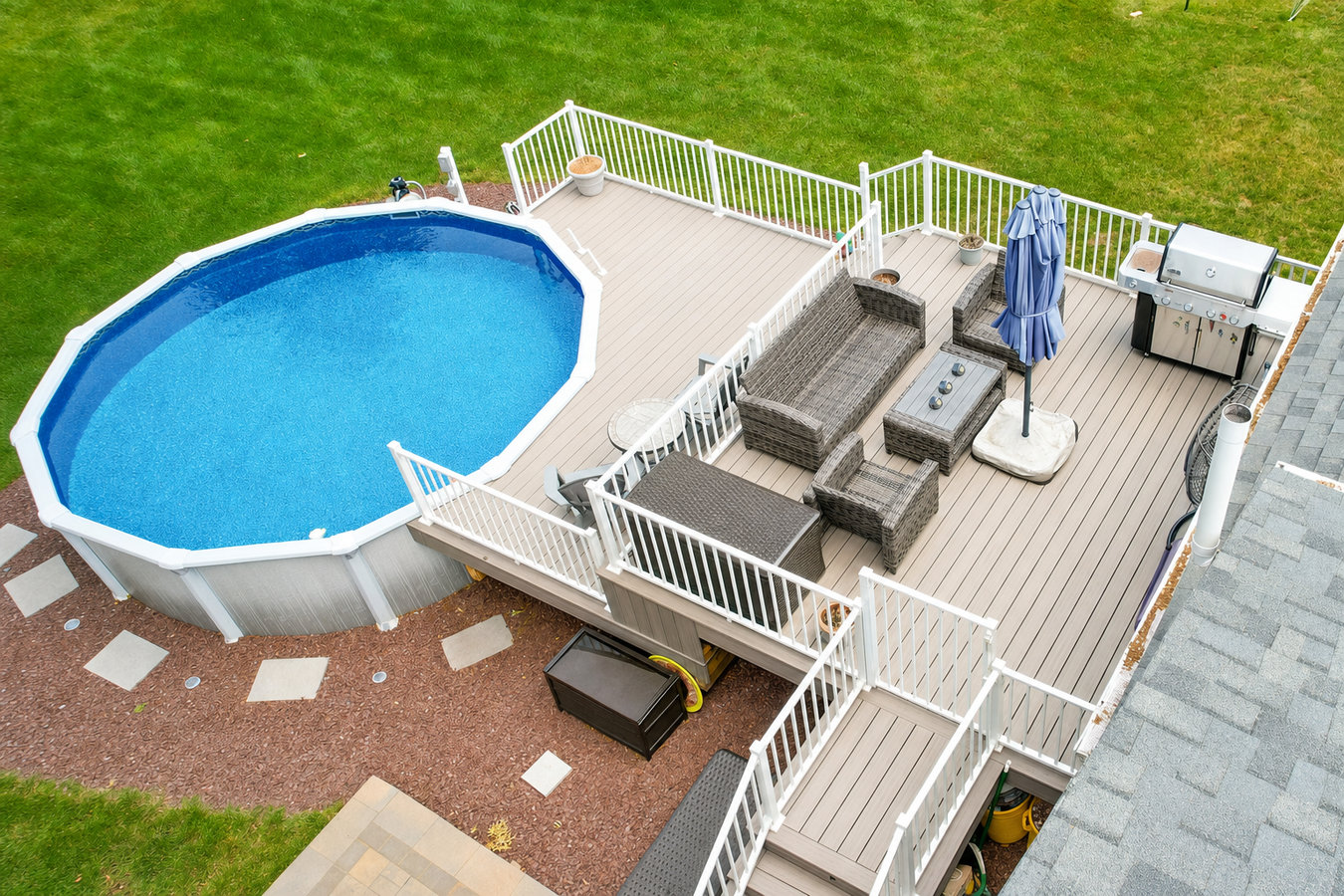
Desert Hot Springs has a higher share of homes with in-ground pools than most desert communities, and pool decks here take a serious beating from summer temperatures that regularly push past 110 degrees. Cracked, faded concrete around the pool is not just unsightly - it becomes a barefoot hazard by mid-morning in July. A properly built pool deck uses textured, heat-resistant surfaces with drainage sloped away from the pool edge so the brief but heavy Coachella Valley rains do not cause pooling that accelerates surface cracking.
Most Desert Hot Springs homes were built between the 1970s and 2000s with concrete slabs that have no shade coverage at all. From June through September, those open slabs are essentially unusable during daylight hours. A solid patio cover changes that by blocking direct overhead sun and reducing the air temperature in the covered space enough to make the area comfortable for morning coffee or an evening meal. It also protects the slab beneath it from the UV degradation that causes unsealed concrete to chalk and crack over time.
Desert Hot Springs sits at the northern edge of the Coachella Valley where the valley floor opens up and the San Bernardino Mountains come into view to the north - a strong backdrop for an outdoor pergola that frames the view rather than blocking it. A pergola creates partial shade that extends usable outdoor hours during spring and fall without the full enclosure of a solid patio cover, and it can be combined with shade sails or climbing plants to add more coverage over time.
Homes in Desert Hot Springs that have elevated back patios or raised entries need a deck surface that handles the intense Coachella Valley sun without annual refinishing. Composite decking does not need staining, sealing, or sanding - materials that hold up against UV fading on their own, year after year. For homeowners who have been putting off deck maintenance because the desert heat makes that kind of outdoor project unpleasant, composite is a practical way to stop the cycle entirely.
The strong winds that funnel through the San Gorgonio Pass into Desert Hot Springs can strip paint, rattle loose panels, and knock over poorly installed fences multiple times a year. Vinyl fencing handles wind loading better than wood in most applications because it does not warp, crack, or absorb moisture - and it will not need repainting after the UV exposure that quickly fades wood fence stain in this climate. For homeowners who want a clean, low-maintenance perimeter that holds up to the valley winds, vinyl is the practical choice.
The Coachella Valley gets over 300 sunny days a year, and wood decks, fences, and pergolas in Desert Hot Springs age at a pace that surprises most homeowners. A UV-resistant sealant applied every one to two years prevents the surface cracking and graying that signals deeper wood damage is underway. Structures that go three or more years without sealing in this climate often reach a point where refinishing is no longer an option and full replacement is the only path forward.
Desert Hot Springs sits at the northern gateway to the Coachella Valley at elevations between roughly 1,000 and 2,000 feet - noticeably higher than Palm Springs a few miles to the south. That extra elevation brings slightly stronger winds, cooler winter nights, and a UV exposure profile that is intense year-round. Summer temperatures above 110 degrees are routine, and the heat lasts from June through September. Homes here were mostly built from the 1970s onward with stucco exteriors, flat or low-slope roofs, and concrete slab patios - all surfaces that absorb heat and show UV damage quickly without regular maintenance. Most homeowners in Desert Hot Springs are year-round residents invested in making their homes livable, not seasonal visitors - and that means outdoor structures need to hold up through genuine daily use across the full range of desert seasons.
The San Gorgonio Pass, which opens up just northwest of the city, acts as a natural wind funnel that drives high-velocity gusts through the valley repeatedly each year. Those winds can strip shingles, damage pergola roofing panels, and topple lightly anchored fence posts. They also blast fine sand against every exterior surface, accelerating wear on paint, stucco, and caulk. Combined with the overnight freeze events that occasionally hit in December and January - brief but capable of cracking outdoor plumbing and expanding concrete joints - the environment here demands outdoor structures built with local conditions in mind, not standard residential specs drawn up for a milder climate.
Our crew works throughout Desert Hot Springs regularly, and we understand the local conditions that affect deck builder work here. Permits in Desert Hot Springs go through the city's own Building and Safety Division - a separate process from Riverside County, which handles permits for unincorporated areas nearby. We know the city's review process, what a complete permit submittal looks like for a deck or patio cover project, and how to avoid the back-and-forth that happens when applications are missing information.
Desert Hot Springs runs from the older neighborhoods near downtown and Cabot's Pueblo Museum on the south end out through newer subdivisions to the north and east, where larger lots and more recent construction are common. The older parts of the city closer to Palm Drive and Desert View Avenue tend to have smaller homes with aging concrete slabs that need replacement or coverage. The newer developments on the city's north edge have larger yards and a mix of property types that includes both single-family homes and some manufactured housing. We work across all of these neighborhoods and build to what each property actually needs.
We serve neighboring Palm Springs to the south and Twentynine Palms to the northeast. If your property is in Desert Hot Springs, call us and we will come out to assess the site at no cost.
Reach out by phone or through our contact form with a brief description of what you need. We respond within one business day and schedule a free on-site visit at your convenience.
We assess the site - including existing slabs, drainage, and wind exposure - and provide a written estimate covering materials, labor, and permit costs before any commitment is made. No surprise additions once the work starts.
We handle the permit application with the City of Desert Hot Springs and give you updates on review status. Once approved, we schedule construction and provide a clear timeline from start to finish.
We complete the build, coordinate all required city inspections, and walk through the finished project with you before closing out the job. You sign off only when the work meets your expectations.
We serve all of Desert Hot Springs - from the older neighborhoods near downtown to the newer developments on the north side of the city. No obligation, no pressure.
(442) 205-1236Desert Hot Springs is a city of about 34,000 people in Riverside County, sitting at the northern edge of the Coachella Valley just north of Palm Springs. The city is best known for its natural underground mineral hot springs, which feed dozens of small spas and hotels throughout the city and have defined its identity since the mid-20th century. The springs are fed by the same geothermal activity that runs beneath much of the valley floor, and nearly every resident and visitor knows the city for them. Beyond the spa culture, Desert Hot Springs is a working residential city - mostly single-family homes built from the 1970s onward, with a mix of older neighborhoods close to downtown and newer subdivisions on the city's expanding north and east edges. Home values here are notably lower than in Palm Springs or Rancho Mirage, which has attracted a steady mix of working families, retirees, and first-time buyers over the past two decades.
The city runs along Gene Autry Trail and Palm Drive from south to north, with landmarks like the original downtown core near Two Bunch Palms Trail on the older south end and newer residential development pushing north toward the Mission Springs area. Many homes have pools and outdoor living spaces that take a beating from the intense Coachella Valley sun and the persistent winds off the San Gorgonio Pass. Nearby Palm Springs to the south and Cathedral City to the southeast share a similar climate profile, though Desert Hot Springs sits at a higher elevation where conditions can be slightly rougher year-round.
Get a one-of-a-kind deck built to fit your space and lifestyle.
Learn MoreEnjoy a beautiful, low-maintenance composite deck that lasts for years.
Learn MoreSolid, affordable pressure-treated wood decks built to endure the elements.
Learn MoreNaturally beautiful cedar decks that resist rot and look stunning.
Learn MoreProtect and refresh your deck with professional staining and sealing.
Learn MoreClassic wood and privacy fences that define your property beautifully.
Learn MoreEnjoy the outdoors pest-free with a professionally screened porch or deck.
Learn MoreStay cool and comfortable with a sturdy covered deck or patio.
Learn MoreYucca Valley Fence & Deck builds pool decks, covered patios, pergolas, and fences throughout Desert Hot Springs. Call us or fill out the form and we will come out to your property at no charge.