Loading...
Serving Yucca Valley, CA and surrounding areas. (442) 205-1236
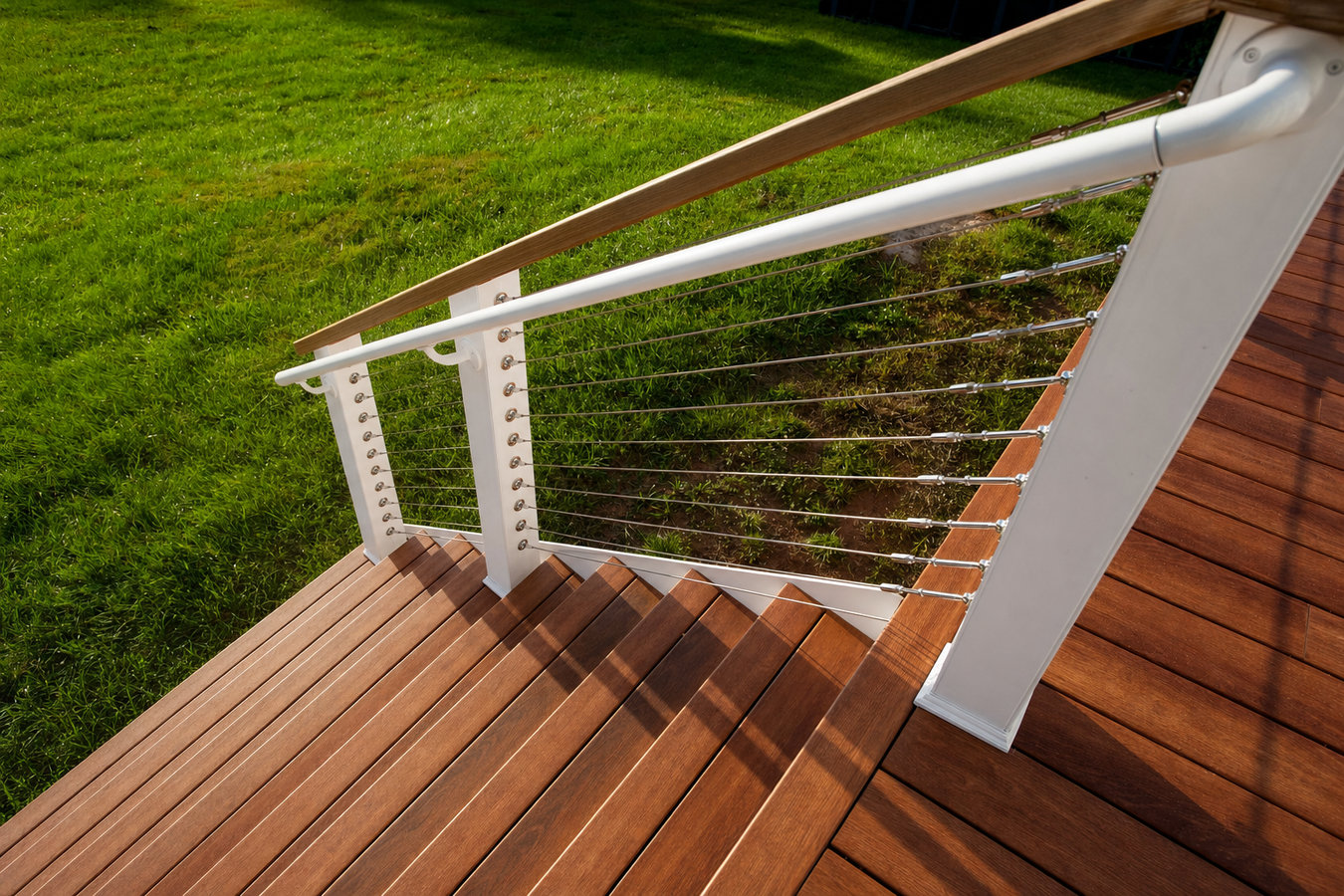
A railing that wobbles is not just an annoyance - it is a safety problem. We install code-compliant deck railings built for High Desert wind and UV conditions, fully permitted through the Town of Yucca Valley.
Deck railing installation in Yucca Valley involves removing the old railing if there is one, setting new posts into or onto the deck frame, attaching top and bottom rails, and filling the space in between with balusters, metal spindles, glass panels, or cable - with most standard jobs on a single-level deck completed in one to two days once the permit is approved by the Town of Yucca Valley.
Railing is not just a finishing touch. California building code requires railings on any deck more than 30 inches above the ground, and the standards for height, spacing, and post anchoring exist specifically to prevent falls. In Yucca Valley, the desert environment adds another layer - intense UV exposure breaks down materials that look fine in milder climates, and the High Desert wind corridor means posts need to be anchored more robustly than a standard suburban install. A railing that passes a quick push test when it is new may not stay solid if it was not anchored correctly to begin with.
Railing is typically the last step in a larger deck project. If you are starting from scratch, we install railing as part of every custom deck design and build we complete, and it is always included in our multi-level deck projects where each elevated platform requires its own compliant railing system.
Stand at the railing and push firmly sideways with both hands. If it moves at all - even a little - that is not normal and it is not safe. A properly installed railing should feel as solid as a wall. Wobble usually means a post has come loose from its anchor, which is a structural problem that gets worse over time, not better.
In Yucca Valley's intense desert sun, untreated or under-maintained wood railings can go from looking tired to genuinely unsafe within a few seasons. If the surface is rough, cracked, or splintering, the wood has dried out past the point where sealing will help. When damage goes all the way through the wood rather than just on the surface, replacement is the right call.
Walk around the outside of your deck and look at where each post meets the deck. If any post is visibly leaning, or if you can see a gap opening up between the post base and the decking, the anchor has failed. Desert soil movement and temperature cycling - both common in the Yucca Valley area - can work post hardware loose over years, especially on older decks.
Buyers' inspectors look closely at deck railings, and a failed or non-permitted railing can show up as a required repair in escrow. If your railing was installed without a permit or does not meet current height and spacing requirements, a buyer's lender may require it to be corrected before closing. Getting ahead of this before you list saves time and negotiating leverage.
Every railing job we take on begins with a structural check of the deck frame before the first post goes in. In Yucca Valley, sandy soil and wide temperature swings can shift deck footings over time - enough to affect whether new railing stays solid for the long term. If the underlying frame has moved or deteriorated, we tell you before we start, not after. All railing work is permitted through the Town of Yucca Valley's Community Development Department, and we schedule and coordinate the final inspection so you receive a clean permit record with the job.
We also work with homeowners whose properties are in HOA communities - many of Yucca Valley's planned neighborhoods have design guidelines that govern railing colors and materials visible from the street. We help you understand what your HOA typically requires and which material choices move most smoothly through that review process. The finished railing connects seamlessly to projects like a custom deck design and build or a multi-level deck where multiple railing runs need to match across connected platforms.
The top-performing choice for Yucca Valley's desert conditions - does not crack, rot, or fade under intense UV, and holds up to High Desert wind loads without the maintenance demands of wood.
A low-maintenance alternative that handles desert sun well and comes in a range of styles - suits homeowners who want a clean look with near-zero upkeep after installation.
Works well for homeowners who prefer the natural look and are committed to sealing or painting every year or two to protect the material from Yucca Valley's drying heat and UV intensity.
For homeowners with views to preserve - cable and glass systems keep sightlines open while meeting California's height and load requirements, installed with the same anchoring standards as any other railing system.
Yucca Valley receives some of the most intense year-round sun in California. That level of UV exposure bleaches and cracks untreated wood within a season or two and can fade lower-grade composite and vinyl products faster than most manufacturer warranties account for. When you choose a railing material here, you are making a choice that will be tested by a climate that is harder on outdoor materials than most contractors outside the High Desert are used to. We only recommend materials we have seen hold up over multiple years in this area. Homeowners in Desert Hot Springs and Palm Springs face similar conditions, and the same material standards apply across all our work in the Coachella Valley and High Desert region.
The San Gorgonio Pass wind corridor funnels powerful gusts through the Coachella Valley and into the Yucca Valley area, and the open high desert terrain means there is little to slow the wind down. Deck railings that are adequately anchored for a calm suburban yard may not be sufficient here. We use heavier post hardware and more robust anchoring methods as a standard practice - not as an upcharge. The Town of Yucca Valley's Community Development Department requires a permit for railing installation, and the inspection that comes with that permit is the final confirmation that everything was anchored correctly. That documentation protects you whether you plan to stay in your home for decades or sell it in the next few years.
When you reach out, we ask a few basic questions - how long is the railing run, how high is the deck, what material are you considering, and whether there is an existing railing to remove. We schedule an on-site visit within a few days and arrive ready to measure, assess the deck frame, and walk through material options with you. Written quotes come back within one business day.
Once you approve the quote, we submit a permit application to the Town of Yucca Valley Community Development Department. Permit approval timelines vary - anywhere from a few days to a few weeks. We give you a realistic timeline based on current local turnaround, not a best-case estimate.
The crew removes the old railing if there is one, sets and anchors the new posts, then attaches the rails and balusters. Most standard railing jobs on a single-level deck are finished in one day. Before we leave, we walk every post with you - push on them, check spacing, and address anything that does not look right while we are still on site.
We schedule the building inspection with the town. The inspector checks railing height, post anchoring, and baluster spacing. Once it passes, you receive a copy of the approved permit to keep with your home records. The whole process from first call to final sign-off typically takes two to four weeks, with most of that time being permit processing.
We handle the permit, the inspection, and the cleanup - you just enjoy a railing that actually holds when you lean on it.
(442) 205-1236The San Gorgonio Pass wind corridor is not something you plan around with a standard suburban install. We use heavier post hardware and through-bolt anchoring methods specifically because of the wind loads common in this area. What that means for you is a railing that stays solid when the spring gusts come through - not one that feels loose six months after installation.
We inspect the condition of your deck frame before setting the first post. If the frame has shifted - which happens on older decks in Yucca Valley due to sandy soil movement and years of temperature cycling - we tell you before we start. Installing railing on a compromised frame is a problem that shows up quickly, and we are not willing to let that happen on a project with our name on it.
We handle the permit application, coordinate the inspection, and hand you the approved paperwork when the job is done. Your railing is on record as built correctly - which protects you if you ever sell your home or need to make an insurance claim. The Town of Yucca Valley's Community Development Department handles these permits, and we work with that process regularly.
We have seen how different railing materials perform over multiple years in the High Desert. We recommend aluminum, powder-coated steel, and desert-rated composites because they hold up here - not because they are the easiest to install. The American Wood Council's deck construction guidance backs the post anchoring standards we follow on every job.
A railing should never be the thing that makes a homeowner nervous about stepping onto their own deck. We build to prevent that, and the permit inspection at the end of every job is the independent confirmation that the work meets the standard. For reference on railing installation best practices and post anchoring requirements, the American Wood Council and the North American Deck and Railing Association set the standards we follow.
Build a new deck from the ground up with railing designed into the project from the start, rather than added after the fact.
Learn MoreAdding a second level to your existing deck also means adding code-compliant railing to every elevated platform - we handle both together.
Learn MoreWe handle the permit, the inspection, and the details - reach out today and get a written estimate based on your actual project.